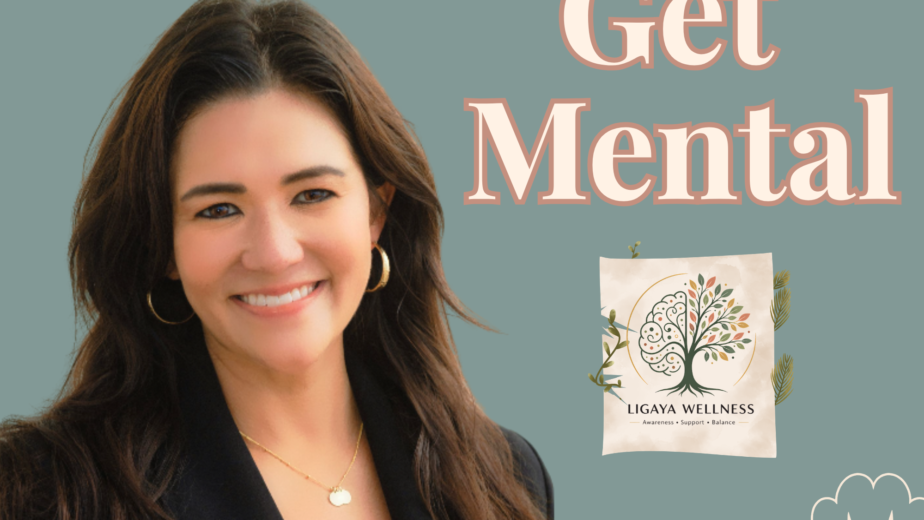
My name is Ligaya.
In Tagalog, Ligaya means joy. It means happiness.
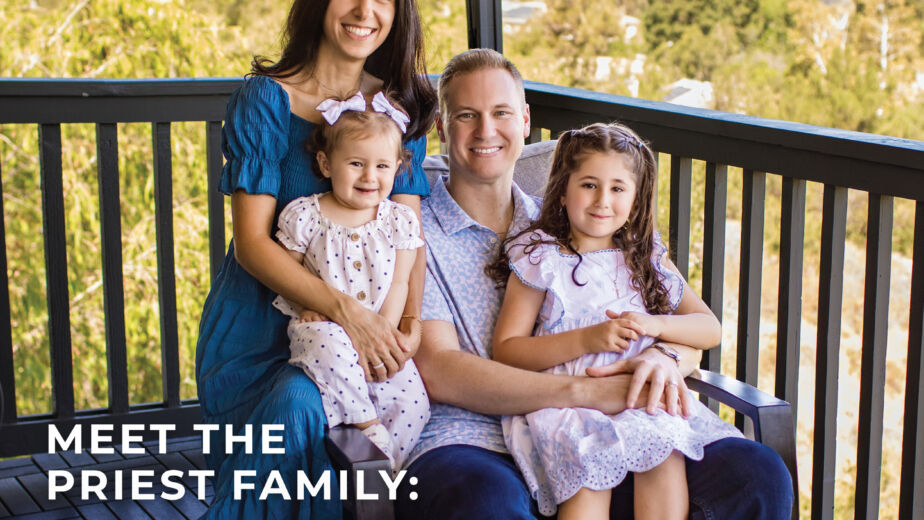
My mom is a nurse from the Philippines (shocking, right?), and my dad is a chemical engineer from Pittsburgh.
People have asked me about my name my entire life. The answer has always been easy: “It means happiness”.
The harder question is whether I’ve always felt it.
The truth is, there were periods of my life when I was anything but happy.
Like many professionals, I experienced multiple bouts of anxiety while building what appeared to be a successful career. During these bouts of anxiety I would experience throughout my 20’s and early 30’s, I would normally spend about six weeks waiting for my SSRI to kick in (there is NO shame in using medication, by the way…). During this time, I was functioning as what experts call a presentee employee- showing up to work, attending meetings, hitting deadlines, and appearing productive while quietly struggling underneath the surface.
No one knew.
Not my colleagues.
Not my managers.
Not the leaders who continued to promote me and invest in my growth.
From the outside, I looked confident and capable.
Inside, I was barely holding it together.
Ironically, while privately managing anxiety, I was thriving professionally.
I spent much of my career at Fox, where I found something increasingly rare in today’s workplace: community. I had mentors who believed in me, leaders who challenged me, and colleagues who became lifelong friends. At 25, I co-founded and captained the Fox Triathlon Team, which over the next 10 years became a formidable presence among studio teams at the annual Malibu Triathlon and raised close to $1 million for Children’s Hospital Los Angeles. More importantly, I witnessed firsthand the power of community, connection, and shared purpose to transform lives. Long before workplace well-being became a professional focus for me, I saw how bringing people together around health, challenge, and service could strengthen both individual resilience and organizational culture.
I learned during my time at Fox that people don’t just stay at a company because of a paycheck. They stay because they feel connected- to a purpose, to their colleagues and to something larger than themselves.
That experience shaped a belief I still hold today:
Employee well-being isn’t a perk. It’s a business imperative.
For me, Fox wasn’t just a place to work.
It was my community- a place I belonged.
Then everything changed.
The Disney acquisition of Twentieth Century Fox in 2019, the pandemic, pregnancy, and remote work arrived in rapid succession. Almost overnight, the workplace community I loved disappeared.
What I didn’t realize at the time was that losing my professional home would ultimately lead me to discover my purpose.
A few years later, I found myself facing severe Postpartum Anxiety and Postpartum OCD. Despite having a supportive family, a successful career, and every reason to feel grateful, I was struggling in ways I never imagined possible. I didn’t know what to do or where to go for help.
That experience taught me something I now teach employers every day:
Access to care means very little if people don’t know where to go, how to get help, or feel safe enough to ask for it.
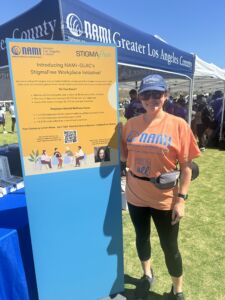
After a long recovery, I realized the corporate work I had been doing my whole life was no longer fulfilling to me. I wanted to help people! Sounds cheesy, but it’s true. I started my podcast “Let’s Get Mental” in 2022 – which was recently reimagined and relaunched with its 32nd episode and has a modest but growing Instagram following of ~4500 – chronicling my early years with Anxiety, my struggle through Postpartum and various other mental health topics. Through podcasting and developing a platform for maternal mental health awareness, I found my way into mental health advocacy, eventually becoming a Certified Peer Support Specialist and going to work for NAMI GLAC (National Alliance on Mental Illness Greater Los Angeles County). I first stood up their warmline and created a community outreach team called “Connect With Hope”, and later became the Director of Corporate Outreach which was fitting given my 15 years of corporate work experience prior to NAMI.
In that role, I partnered with organizations across industries- from law firms and healthcare organizations to construction companies and property management firms- and I discovered something fascinating.
Every industry has unique challenges.
Every employee has a unique story.
But one issue showed up almost everywhere:
Burnout.
Executives talked about it.
Managers talked about it.
Employees talked about it.
And yet many organizations were still relying on the same approach: an EAP (Employee Assistance Program), a wellness fair, and perhaps a mental health presentation once a year.
Here’s something for leaders to think about:
Research consistently shows that organizations investing in employee mental health see measurable returns in productivity, engagement, retention, and performance. At the same time, employees increasingly rank culture and well-being alongside compensation when deciding where to work- and whether to stay.
The question isn’t whether mental health impacts your organization.
It already does.
The question is whether you’re addressing it intentionally.
That’s the work I do today.
I help organizations move beyond checking the box.
I provide practical coping and preventative skills that can be utilized immediately, in any work environment.
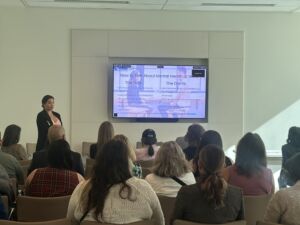
I speak, train, and consult on workplace mental health, burnout prevention, provide manager mental health training, and work to continuously improve psychological safety and employee well-being. But what I’m most passionate about is helping organizations create ongoing programs that drive real culture change- not just awareness.
Because people perform their best work when they feel supported as human beings first.
And because we spend too much of our lives at work for it not to matter.
So if you’re an HR leader, executive, manager, or business owner wondering how to create a healthier, more resilient workplace, I’d love to hear your story.
Tell me what’s working.
Tell me what’s not.
Tell me where your people are struggling.
And let’s figure out what meaningful change could look like together.
After all, my name is Ligaya. And no, I did not just name a company after myself. I named it after my purpose.
Helping people find a little more happiness at work, and hopefully their personal life too, feels like exactly what I was meant to do.
So… call me, maybe?